What If Your Communication Network Could Reveal Its Physical Structure?
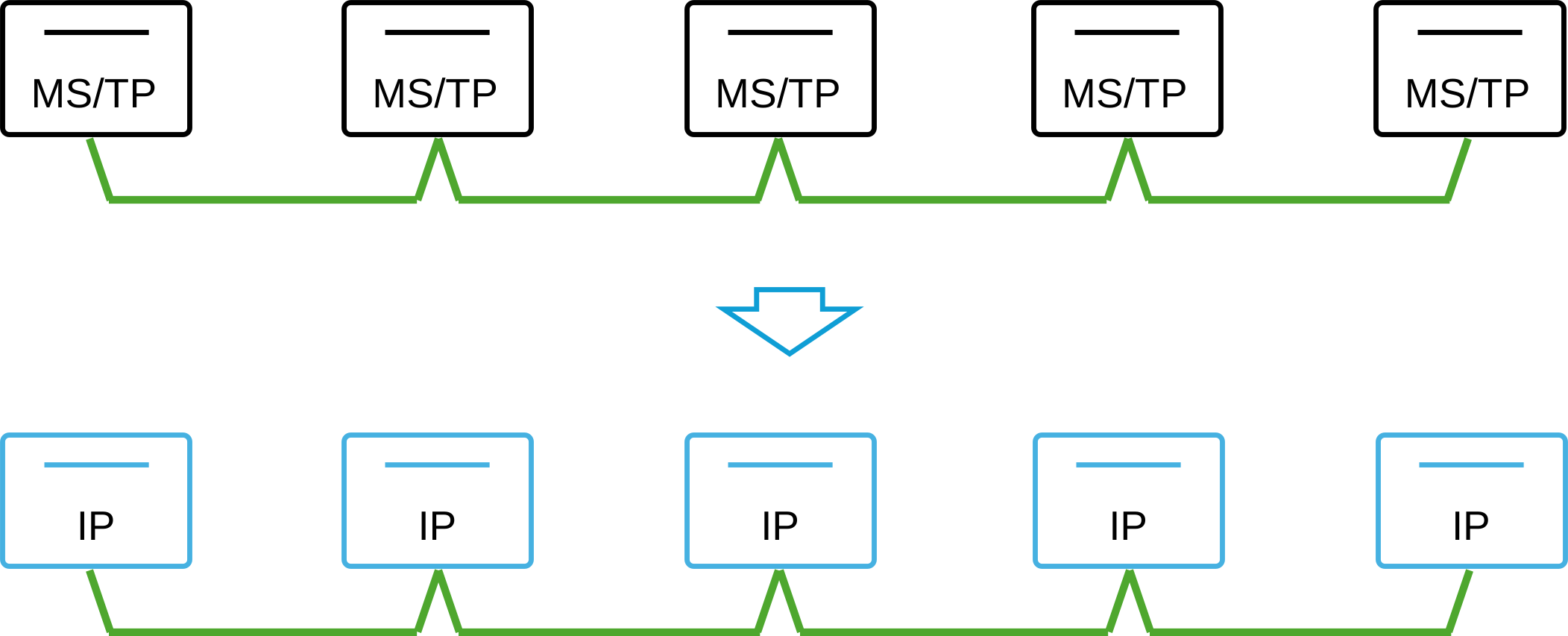
What if a communication network could tell you not only whether devices are connected, but also where they are connected and how far apart they are?
Traditionally, wired networks have been used solely for communication. Information such as device locations, cable lengths, and network topology must be documented separately and maintained throughout the life of the system.
In simple terms, Nessum can estimate how far apart devices are connected and provide insight into the physical structure of a wired network.
This capability can support network mapping, asset identification, moving equipment tracking, and network health monitoring without requiring additional sensing infrastructure.
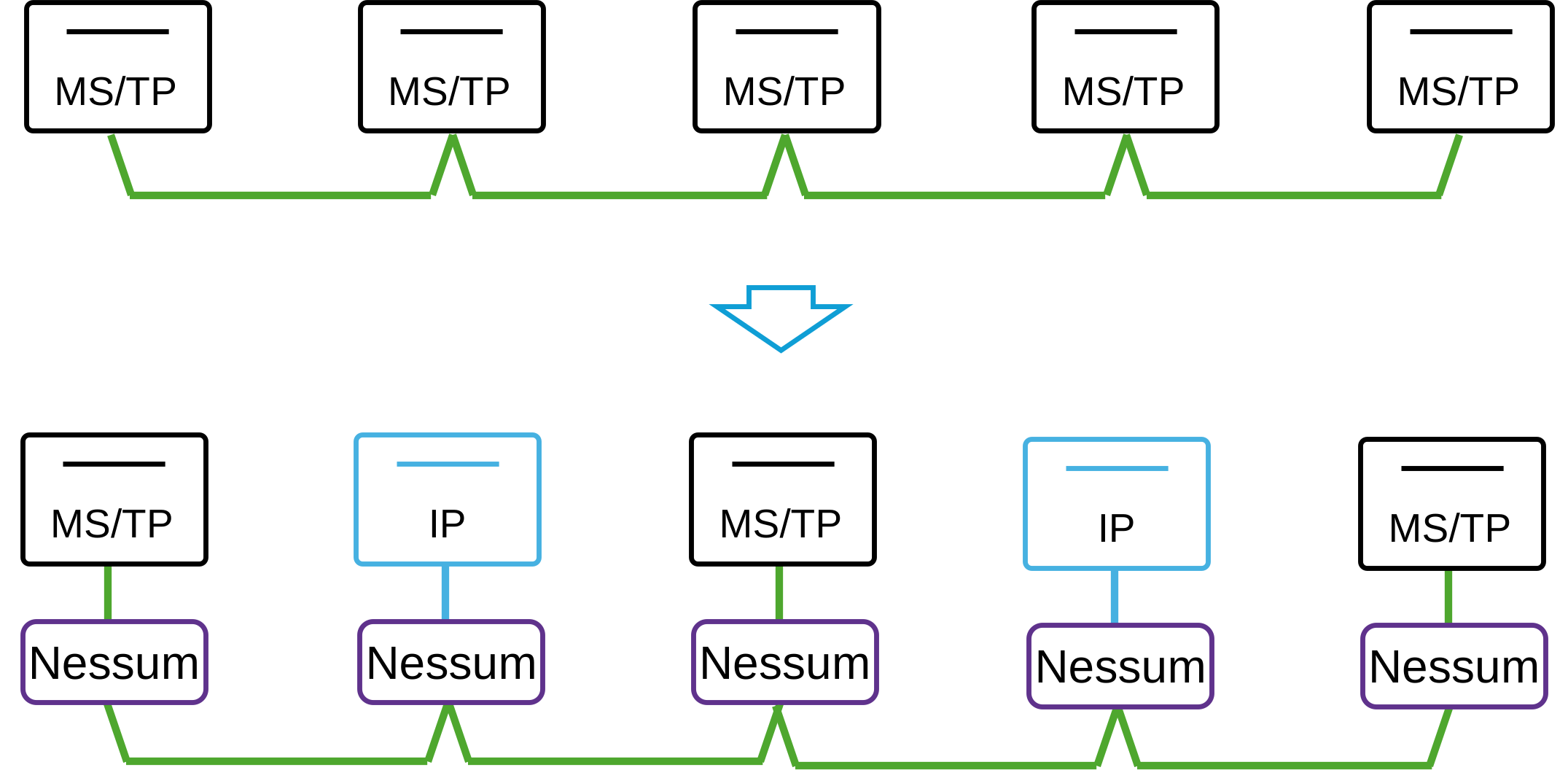
Nessum introduces a new capability by enabling distance estimation and topology inference over the same infrastructure already deployed for communication.
How Nessum Measures Distance and Infers Network Topology
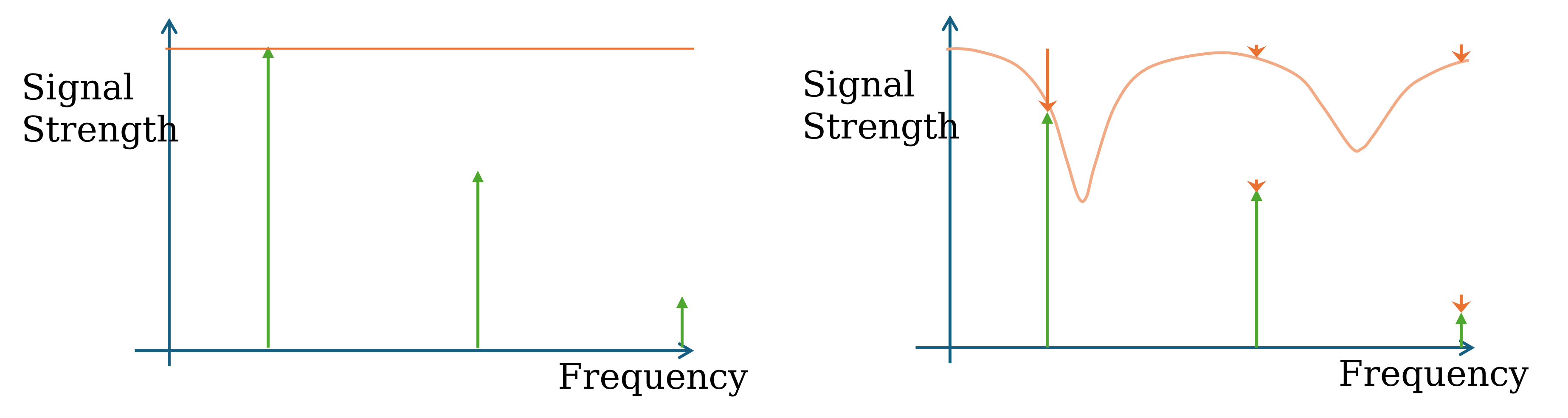
Nessum, based on IEEE 1901c, supports propagation delay measurement between communicating devices.
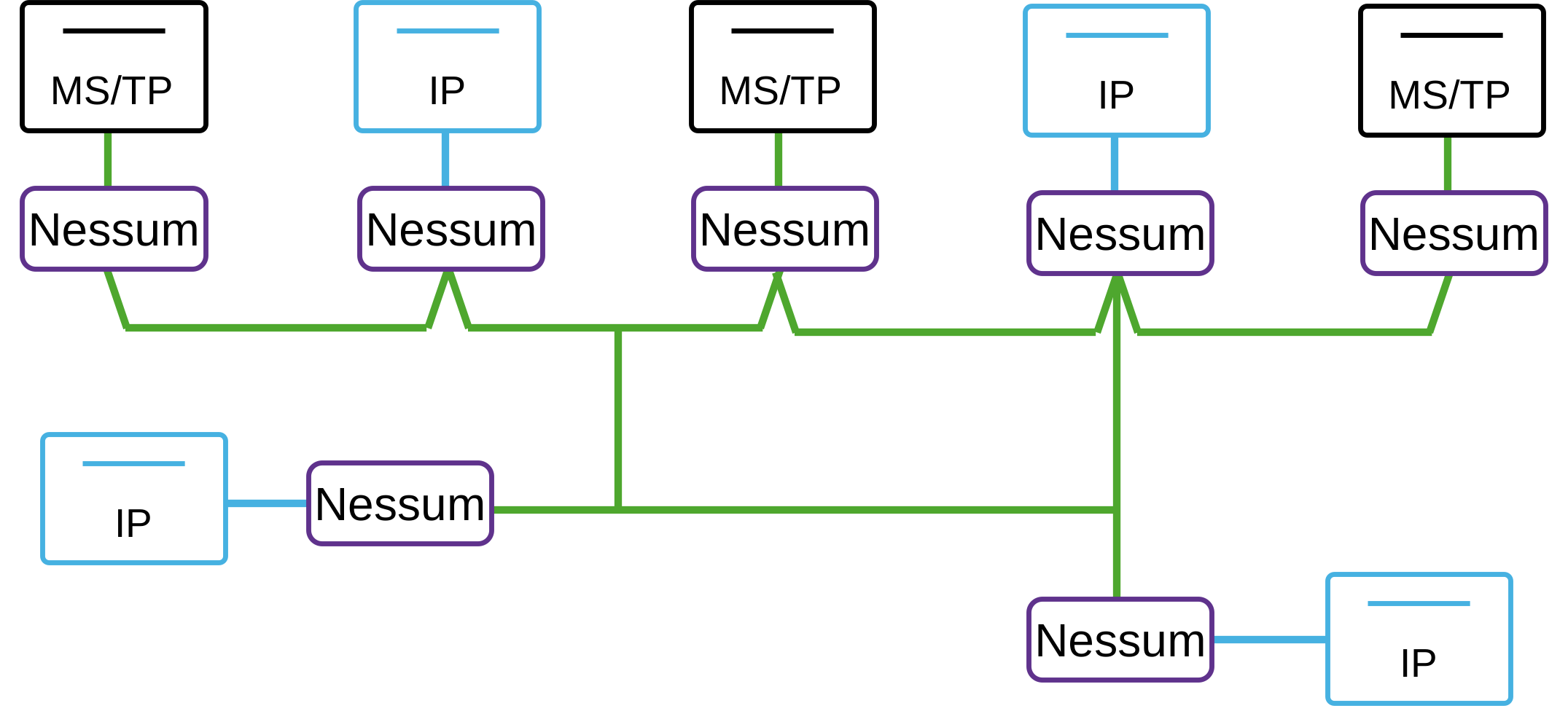
By combining measured propagation delay with the propagation characteristics of the cable, the distance between devices can be estimated. Furthermore, propagation delay measurements collected from multiple nodes can be used to infer network topology and estimate cable lengths.
As a result, Nessum devices can provide more than connectivity. They can also provide insight into how a network is physically constructed.
Because Nessum supports a wide range of cable types and network topologies, this capability can be applied across many wired environments, including power lines, control cables, coaxial cables, and twisted-pair wiring.
Unlike traditional cable testing methods such as Time Domain Reflectometry (TDR), Nessum performs these measurements through the communication network itself, enabling continuous visibility into network conditions without dedicated test equipment.
Practical Applications
Distance estimation and topology inference open up new possibilities beyond communication.
Here are a few examples of how this information can be used in real-world systems.
Network Mapping and Change Management

Creating and maintaining accurate wiring documentation is often a challenging and time-consuming task.
As systems grow, manually maintained wiring diagrams can become outdated or contain errors. Verifying whether documentation still reflects the actual installation may require significant effort, especially after expansions or modifications.
Distance measurements and inferred topology information can help generate and validate network maps, making it easier to maintain accurate documentation over time.
When new branches or devices are added, updated measurements can reveal how the network structure has changed. This helps maintenance teams verify that modifications match the intended design and identify undocumented changes that may affect future maintenance activities.
Identifying Connected Assets

Many modern systems rely on plug-and-play operation.
Consider an EV charging installation with multiple charging stations. When a vehicle is connected, operators may need to determine which charging station the vehicle is physically connected to for monitoring, billing, or asset management purposes.
Distance and topology information provide additional context that can help identify the physical connection point of the vehicle within the network.
Tracking Moving Equipment

Nessum can also be deployed in systems where moving equipment communicates through power rails.
Examples include automated guided vehicles (AGVs), industrial transport systems, and other mobile platforms that receive both power and communication through the same infrastructure.
By monitoring changes in propagation delay, users can estimate the relative position of moving equipment without requiring dedicated positioning infrastructure.
Network Health Monitoring

Traditional cable diagnostics often require dedicated test equipment, manual measurements, and on-site inspections.
With Nessum, propagation delay information can be obtained through the communication devices already installed in the network. This allows network characteristics to be monitored continuously during normal operation without interrupting service.
The ability to observe changes over time provides valuable insight into network health.
For example, unexpected changes in estimated distance may indicate deteriorating connections, cable degradation, or partial cable faults. These changes may be detected before they develop into communication failures, helping maintenance teams identify potential issues earlier and reduce troubleshooting time.
When combined with communication statistics, distance information can provide additional context for diagnosing abnormal network behavior.
Rather than performing measurements only after a problem occurs, operators can continuously monitor the physical condition of the network using the same infrastructure already deployed for communication.
Beyond Communication
Nessum enables more than data communication.
By leveraging propagation delay measurements defined in IEEE 1901c, users can improve network documentation, identify connected assets, track moving equipment, and monitor network health using the same infrastructure already deployed for communication.
The result is a smarter wired network—one that not only carries data, but also provides visibility into the physical structure and condition of the system itself.
FAQ: What Can Nessum Distance Estimation Be Used For?
What is Nessum distance estimation?
Nessum uses propagation delay measurements defined in IEEE 1901c to estimate the distance between communicating devices and infer network topology.
What applications can benefit from distance estimation?
Distance estimation can support:
- Network mapping and documentation
- Network change management
- Asset identification
- Moving equipment tracking
- Network health monitoring
Does distance estimation require additional sensors or test equipment?
No. Nessum performs distance estimation using the same communication infrastructure already deployed for networking, eliminating the need for dedicated positioning systems or cable diagnostic equipment.
What types of networks can use this capability?
Because Nessum supports a wide range of cable types and topologies—including free-topology networks—distance estimation can be applied to power lines, control cables, coaxial cables, and twisted-pair wiring.
Get Started Today
Order your Evaluation Kit and experience the benefits of Nessum today!
About the Author
Kengo Tamukai is a senior engineer specializing in wired and wireless communication technologies. With over 20 years of experience in LSI design, system architecture, and technical marketing, his expertise spans SoC design, OFDM-based technologies, and hybrid communication systems, driving innovation in modern digital networks.